What should I read next? It’s a question we all ask ourselves time and again. Even with the countless stories, poems, essays, scripts, art, comics, and films to discover, to fall in love with or to detest, it can be a challenge to choose. Enter Expo Recommends, a curated selection of readings brought to you by the editors of Exposition Review.
Meanwhile, Expo is in the midst of our 2026 annual issue submission season. For Vol. XI, our editors chose the theme “PARA/SOCIAL,” inviting work that traces the edges of intimacy and illusion, seeking longing projected across distance, the distortions of connection, and the gifts of being alongside—with or without perception and recognition.
Heading into the second half of our submission season (our deadline is December 15), we want to give you—our readers, writers, submitters, and community—an extra dose of inspiration. So whether you read Expo Recommends for the recommendations or a behind-the-scenes look into the preferences of our editorial team, we hope you’ll enjoy our “PARA/SOCIAL”-inspired Expo Recommends. And when you buy your copies of the books from our Bookshop, Exposition Review gets a cut!
Shit Cassandra Saw by Gwen E. Kirby (flash fiction)
From Flash Fiction Editor Jessica June Rowe
When preparing for our “PARA/SOCIAL” issue, I was immediately drawn to the phrase “connection without contact” in our call for submissions. The story of Cassandra is a great example of this: it’s an intimate thing knowing someone’s fate while they remain in the dark, knowing they will never touch your truth. Gwen E. Kirby’s short story “Shit Cassandra Saw That She Didn’t Tell the Trojans Because at that Point Fuck Them Anyway,” originally published in SmokeLong Quarterly, pushes the parasocial themes even further, adding a bitter and bright and achingly funny pop-culture twist to the classic myth. It’s the kind of story I love best: a blend of past, present, and feminist future. The piece was the first piece in Kirby’s debut short story collection, which shares the same though shortened name: Shit Cassandra Saw. The women within the collection are fierce and strange and a delight to read about. Highly recommend!
Parasocial — A Game by Chilla’s Art by Chilla’s Art (experimental)
From Stage & Screen Editor Mellinda Hensley
I have a confession to make: I watch a lot of YouTube. Like, a lot of YouTube. Music videos, walkthroughs, video essays—you name it, I’m injecting directly into my eyeholes. But one genre I’ve taken a deep dive into this past year is video game playthroughs. Why do I enjoy watching someone else play a game? That’s a rock I’ll likely never turn over, as I fear what reason might be crawling underneath. Listen, the world’s a hellscape, so let me have my weird little treats, OK? But when I saw creator jacksepticeye do a playthrough of a game called “Parasocial,” I knew I needed to play it for myself, and I ended up devouring everything else from the indie creators, Chilla’s Art.
Now while this game is a little on the nose for the theme (title and all), I submit the following argument: I don’t care. Sometimes being on the nose is good if the execution’s good, and this indie game delivers in spades. Retro-inspired—it looks great, but you’re not here for super-slick graphics—this game allows you to play as Senra Nina, a VTuber who, due to the actions of an obsessed fan, accidentally has her face exposed during a playthrough. What follows is a haunting exploration of fandom, stalking, and paranoia. You find yourself unable to trust anyone, even those closest to you. I’m always impressed by the fact that this game, along with others in the Chilla’s Art library, was designed by a two-brother team, because it absolutely nails the sinking feeling of being a woman suffering the consequences of being too nice. But I’ve said too much—go play it for yourself! And if you aren’t a video game person, I’d highly recommend watching jacksepticeye’s video—watching a streamer play through a game with these themes inspires him to reflect on the interactions he’s had with fans, an extra eerie layer to an already unsettling game. Buy and play on Steam or watch jack’s playthrough above.
Blankets by Craig Thompson (comics)
From Comics & Film Editor Lauren Gorski
Craig Thompson’s Blankets is a tender graphic memoir about growing up, faith, and the dizzying highs and lows of first love. We follow Craig as he navigates family, religion, and his intense feelings for Raina, a girl he meets at church camp. He longs for deeper connection with her and her world, as his own family history harbors dark secrets, only to slowly realize that Raina is just as imperfect and complicated as anyone in his life. Blending a few of Thompson’s early relationships into one story, the book captures a pre-social media kind of love, unfolding through letters and artwork. Sweet, funny, and painfully honest, Blankets is a perfect reflection on the ways we fall in love with ideas, assumptions, and ultimately, the real people beneath them.
National Gallery of Art Online and ENCODED at The Metropolitan Museum of Art (art)
From Visual Art Editor Brianna J.L. Smyk
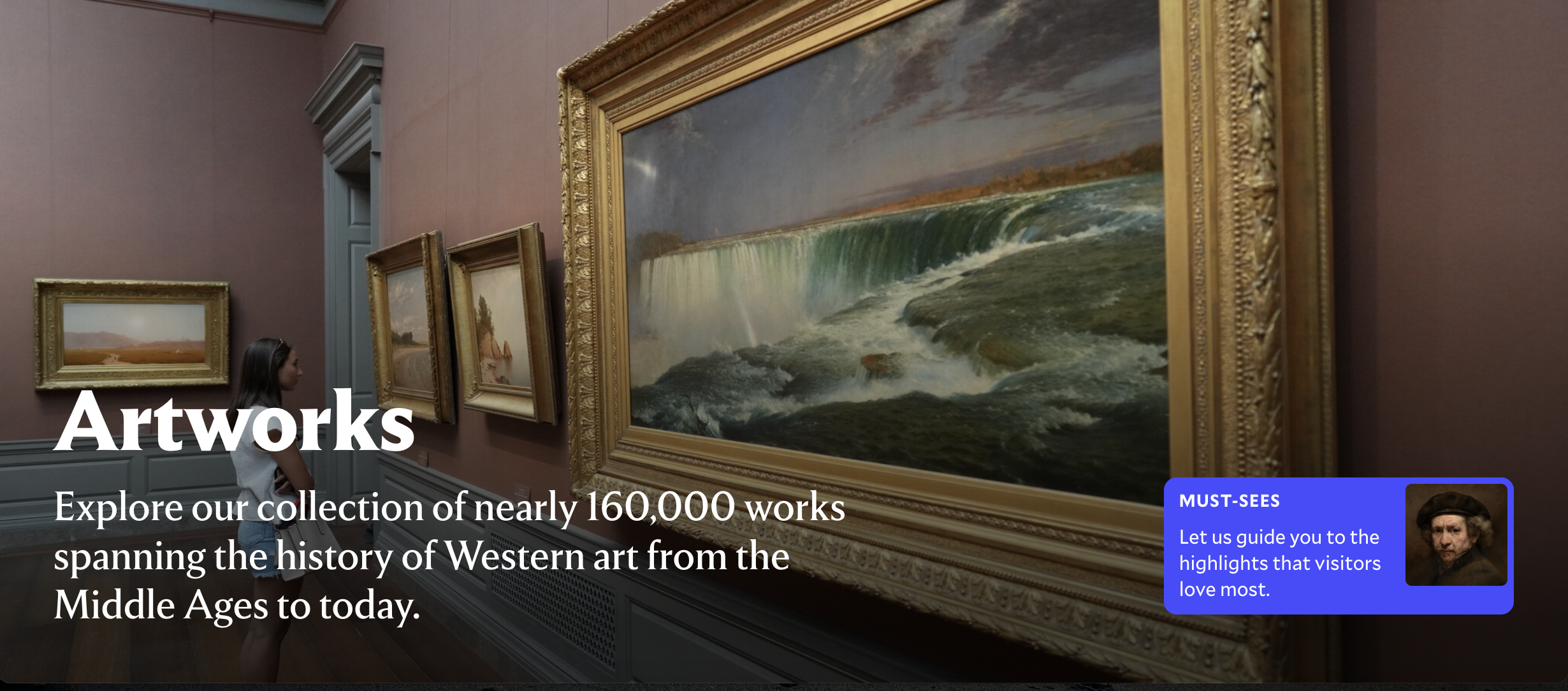
Given the recent closure of the National Gallery of Art during the 43-day government shutdown, I have to throw a shoutout to its online collections. I visited the National Gallery of Art when I went to D.C. in October 2016 (and subsequently included Barnett Newman’s Stations of the Cross as my “Lines” Expo Recommends). I spent an entire day absolutely enchanted by the 11th- to early-20th-century art in the West Building, remembering only after going through Leo Villareal’s Multiverse tunnel that I’d neglected the modern and contemporary wing in the East Building (clearly, I had to go back the next day). In addition to looking at the online collection, I also recommend @ngads’s Instagram, which does in-gallery reels that are wonderful little art-history dives into the works in the collection.
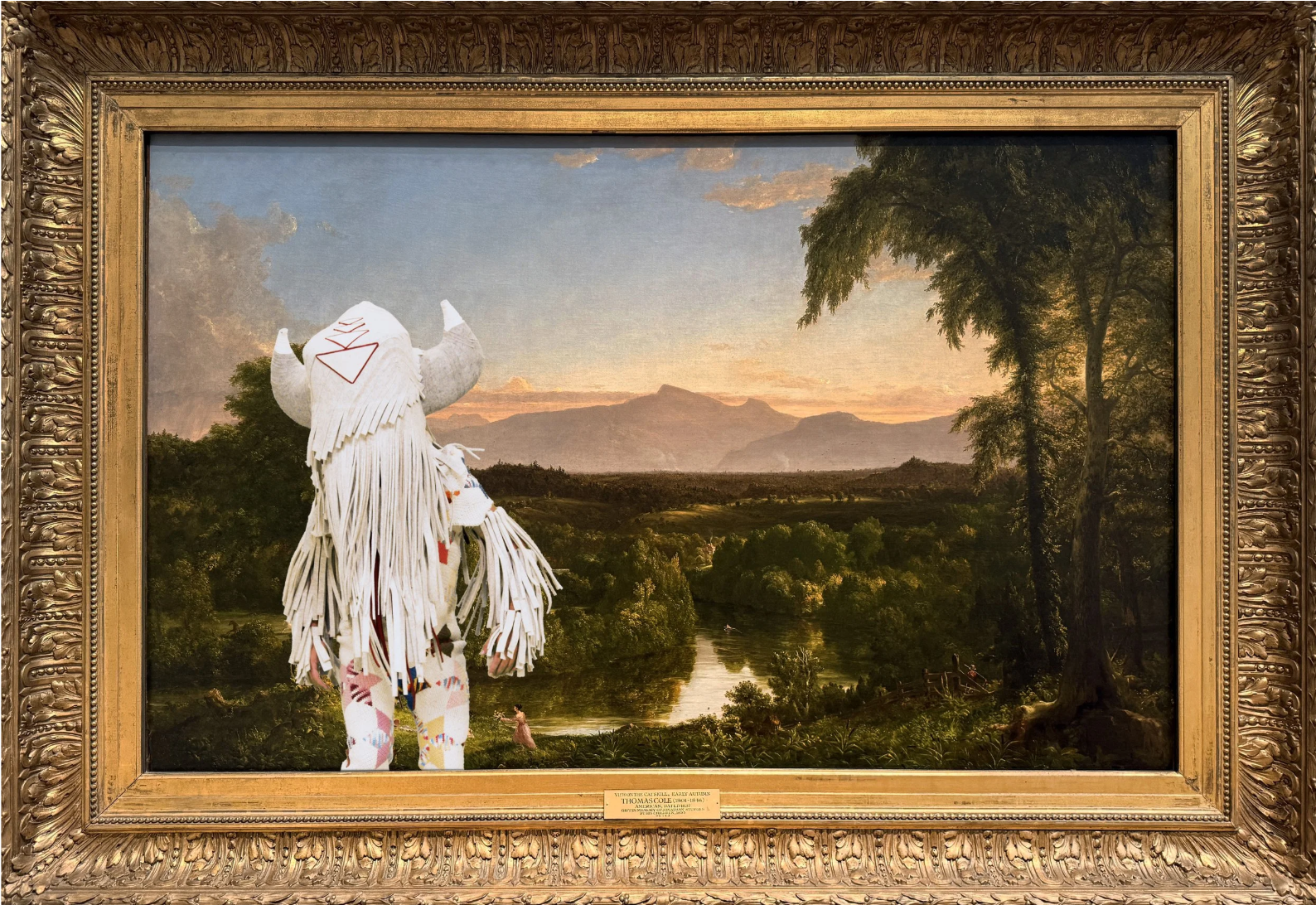
But while I adore the National Gallery of Art, ENCODED: Change the Story, Change the Future, an unsanctioned augmented reality intervention at The Metropolitan Museum of Art, has me again reconsidering the Western view presented in the hallowed domains of many museums. Launched on Indigenous People’s Day 2025, seventeen Indigenous artists from across North America installed their own unsanctioned and surprise exhibition in a takeover of the American Wing of The Met. As exhibition artist Cannupa Hanska Luger and Amplifier put it, the exhibition “confronts the way American art has systemically worked as propaganda to erase us Indigenous people and therefore our connection to this place.” If you’re in New York, it’s on view through December 21.
Lorna Simpson: Source Notes, featuring Expo’s “Flux” cover artist, was also just on view there—check out her book below if you missed it. And for all of us living that “PARA/SOCIAL” life, enjoy your thoughtful scrolling, and check out this book!
The Shards by Bret Easton Ellis (fiction)
From Co-Editor-in-Chief Rebecca Luxton
Few novels capture the dissonance between public performance and private unraveling quite like The Shards. In a story set in a glittering 1980s Los Angeles that feels both hyperreal and hallucinatory, Bret Easton Ellis blurs the boundary between memoir and fiction, friendship and obsession. The narrator—also Bret—drifts through a privileged teenage circle where every connection is mediated by surfaces: mixtapes, rumors, perfectly framed moments of menace. What makes the book riveting (and perfect for “PARA/SOCIAL”) is the way it exposes the parasitic intimacy of being watched, while waiting and wanting to be seen. It’s a novel about storytelling as self-mythology—and about what happens when the myth begins to devour the self.
The Haunting of Hajji Hotak by Jamil Jan Kochai (fiction)
From Associate Fiction Editor Yuya Hattori
You don’t know why, exactly, you’ve been assigned to this particular family, in this particular home, in West Sacramento, California.
In this short story, you spy on an Afghan family. You see everything that happens to them, including a daughter who recently, and secretly, became a vegetarian; a son who watches clips of Muslims being burned alive for hours; a wife, in your professional estimation, the beating heart of the household; and the husband, who is depressed and traumatized from his past. Who are these people? Why do they need to be spied on? Who are you? Why are you spying on them?
The Black Girl in Search of God by George Bernard Shaw (fiction)
From Fiction Editor Dave Gregory
Last year, “Spring” was our theme and, although Merriam-Webster provides more than thirty definitions, it felt as though nine out of ten writers narrowly interpreted “Spring” as, merely, the season following winter—and the majority of short story writers somehow equated “the season of rebirth” with death.
This year, rather than submitting stories of lonely people in love with celebrities or chatbots, I want to encourage writers to be creative and hopeful in their interpretations of our “PARA/SOCIAL” theme: an overheard dietary suggestion could lead to better health, a travelogue could convince a reader to pursue a more adventurous lifestyle, a song could inspire feuding neighbors to reconcile, an old invention could have an unexpected application that leads a broken person toward healing.
And feel free to get philosophical. For example: to an atheist, a Christian’s relationship to God must seem purely “PARA/SOCIAL”—but belief could lead to faith, wisdom, and even love.
“The Black Girl in Search of God” is a novella written by the world-famous playwright George Bernard Shaw while he was in South Africa in 1932. Despite being almost a century old, the story of a questioning young woman encouraged to seek truth by a well-meaning evangelical, whose interpretation of the Bible is not exactly church doctrine, reads surprisingly like contemporary fiction (another story in the collection: “Aerial Football: the New Game” felt as if it could be published tomorrow in any number of online journals, such as X-R-A-Y, Gone Lawn, or even Exposition Review).
In Shaw’s humorous and intelligent parable, his views on greed, gun worship, and racism align rather closely with the views an average American Democrat might hold today:
But nothing will satisfy your greed. You work generations of us to death until you have each of you more than a hundred of us could eat or spend; and yet you go on forcing us to work harder and harder and longer and longer for less and less …
But you do not care for God: you care for nothing but guns.
The Black girl hid herself long enough to make sure that she was not being pursued. She knew that what she had done was a flogging matter, and that no plea of defense would avail a Black defendant against a white plaintiff.
This satirical allegory takes on an agnostic tone as the Black girl’s quest introduces her to various versions of God and Jesus, to Muslims, Roman Soldiers, prophets, conjurors, artists, intellectuals, and maybe even to Voltaire and Bernard Shaw himself. In the young woman’s mind, each offers an inadequate God.
Though tame by today’s standards, this best-selling book was hotly debated in its time—and banned in Shaw’s native Ireland.
It won’t spoil the story if I reveal that the Black girl doesn’t quite find God. Instead, she finds faith, wisdom, and perhaps even love—and that, in my view, is close enough.
Twinnless by James Sweeney (film)
From Comics & Film Editor Lauren Gorski
James Sweeney’s Twinnless is a psychological black comedy that premiered at the 2025 Sundance Film Festival. It’s a film I absolutely love for its dark, twisted commentary on grief and obsession. When Dennis (Sweeney) becomes fixated on Rocky (Dylan O’Brien) and later his twin Roman (also O’Brien), his lies and manipulations escalate into awkward and uncomfortable situations, showing how parasocial attachments can warp friendship and identity in unsettling ways.
My Life by Lyn Hejinian (poetry)
From Poetry Editor Kiana Shaley
Sure, the text might not “be parasocial” or contain “parasocial themes,” but my relationship to Lyn Hejinian sure is. Though a construction, art is oftentimes the truest reflection of the artist. In a work’s decisions are the artist’s innermost interests and inquiries, which oftentimes can only be communicated in one of two ways: through direct conversation with the individual (which I unfortunately will never have the opportunity to do) or through the work. In reading My Life, it was not the memories that resonated with me, but Hejinian’s approach to formalizing memory. Within the threads of what presents itself as a linear progression is a recursive weave: what appeared in childhood reappears throughout our life. The past, as we know, is inescapable—a truth Hejinian embodies through repetition and accumulation.
In My Life’s construction is a timeless reminder of poetry’s ability to submerge, immerse, and in this, render a two-dimensional form into a three-dimensional experience. Read it, love it, and before hitting that page to write your own work, ask yourself the same question Hejinian seemed to have asked: What can poetry be?
Intimacies by Katie Kitamura (fiction)
From Nonfiction Editor Heather Vaughan
In her novel Intimacies, Katie Kitamura explores the nuances and contradictions of connection. The narrator, a translator and interpreter, begins a job at The Hague, interpreting the words of high-profile defendants on trial for alleged human rights abuses as well as the witnesses and victims brought to the courtroom to testify against them. As she navigates her growing closeness with the accused, a former president charged with overseeing the grotesque genocide of an ethnic group, her discomfort and fear also grow. Much like Expo’s “PARA/SOCIAL” theme, this novel asks difficult questions about what it means to connect with someone, from romantic partners, to family, to a murderous former dictator whose words one has to hear and repeat back.
A letter to the girl who lived here before me by Satvik Soni (experimental)
From Fiction Co-Editor-in-Chief Laura Rensing
What better place to find a “PARA/SOCIAL” piece than on Instagram? When a friend sent me this video, I expected the normal internet humor—good for a quick laugh that would quickly fade into the endless scroll of social media. Instead, I was quickly grabbed by the rhythm and repetition of the language, and the surprising compassion of the story … in addition to the internet humor (I still tell people, “Landlords don’t deserve the truth.”).
This piece tells the story of a young man living in an apartment and the letter he writes to the previous occupant inspired by the items they left behind. It is easy to lean into the dark side of “PARA/SOCIAL,” but I find that this piece tells a story of parallel human connection in a way that shows a softer, more compassionate side of our theme. It is no surprise to me that the creator, Satvik Soni, has since grown into “making increasingly longer films,” but his works still keep the absurdist, yet incredibly human themes that drew me in from the first line.
View this post on Instagram
Bo Burnham: Inside by Bo Burnham (film)
From Comics & Film Editor Lauren Gorski
Bo Burnham’s Inside is a raw, inventive look at isolation, performance, and the blurred lines between audience and self, making it an interesting study in parasocial connection. The film, directed and performed entirely by Burnham in a single space during the first year of the pandemic, features his original songs and diaristic reflections, with the audience as a voyeur to his psychological unraveling. For a deeper dive into how his Burnham’s identity struggles with parasocial relationships, check out the Dissect podcast’s deep dive on the special.
Brown Girls by Daphne Palasi Andreades (fiction)
From Expo Intern Luz Aguirre
This novel explores the experiences of a diverse group of young women of color from Queens, New York, as they transition into adulthood. Told in the first person plural, the novel uses a series of vignettes that portray their collective “we” identity in youth and their individual “we” journeys in adulthood. Daphne Palasi Andreades’ writing is lyrical and ferocious. It is a powerful exploration of what it means to come of age as a young woman of color in contemporary America.
Fates and Furies by Lauren Groff (fiction)
From Expo Intern Abigail Jeon
My recommendation is Fates and Furies by Lauren Groff—one of my all-time favorite novels. The story centers on the twenty-plus year marriage of Lotto and Mathilde, a seemingly perfect pair. A shift in perspective later in the novel leaves readers questioning how perfect a relationship can be if one partner truly doesn’t know or understand the other. Fates and Furies fits within the theme of “PARA/SOCIAL” because it touches on the illusion of (and longing for) connection with a person who has been idealized past the point of who they truly are. There is also a bit of a parasocial relationship going on between the couple and the side characters. Their friends idolize, and envy, Lotto and Mathilde, while never really knowing who they are behind closed doors. This is an incredibly beautiful, poetic and almost haunting read.
West Hollywood Monster Squad: A Graphic Novel by Sina Grace and Bradley Clayton (illustrator) (comic)
From Comics & Film Editor Lauren Gorski
Let’s get some paranormal in this parasocial theme! West Hollywood Monster Squad is a super fun adventure through West Hollywood, told from the POV of Marvin Matocho, a high schooler determined to have the time of his life enjoying his favorite drag queen at a local club. When monsters crash the party, Marvin, his friends, and the other survivors are the only ones left to save Los Angeles. The story playfully explores Marvin’s admiration for his favorite drag queen and how being surrounded by literal monsters reshapes his connections to friends and past love.
Now that you have some good writing inspiration and an insider’s look into our editors’ tastes, get reading, get writing, and get submitting to Vol. XI “PARA/SOCIAL” here.
Disclosure: Exposition Review is an affiliate of Bookshop.org and will earn a commission if you click through the links above to make a purchase.