Experimental
*“Mẹ” is Vietnamese for “Mom”

Theresa-Xuan Bui is an interdisciplinary poet exploring the sociopolitical complexities of being a queer Vietnamese American artist as a way to critically imagine and shape the future. The written word is at the core of their practice, serving as a foundation from which they expand into other mediums such as video, sound, sculpture, and performance. With each project, they aim to cultivate nuanced discussions on identity, gender, and language while innovating poetry’s utility and form. They’re a child of the Bui household, a legacy of Vietnamese refugees and vanguard Asian Americans. Born and raised in Bronx, New York, Theresa moved to Houston, Texas, before pursuing a BFA at the Maryland Institute College of Art.
Back to Vol. XI: “PARA/SOCIAL”
* * *
the little daydreamer
Plain Text Version
Note: Mẹ is Vietnamese for “Mom”
Mẹ
I finally read the high school graduation letter you gave me. And of course, I cried. I can’t explain why I waited so long. I think I’ve been insecure about being a child, your daughter, but today I felt ready. And honestly? I can’t recall the last time I genuinely wanted to talk to you, but I feel ready to open up to you now.
Mẹ
I couldn’t eat dinner with our family visiting from New York that time, not because I was too sick, but because I was depressed. I couldn’t leave my apartment, I couldn’t get out of bed, and I couldn’t hurt you. I’m sorry. I was sick, but the soup you wanted to bring to my rescue wouldn’t quite help. So I lied. I couldn’t tell you the truth because I was afraid you wouldn’t understand me, or my sickness, or the fact that I was facing the heartache over a girl named Kaede.
Mẹ
I like girls.
And guys.
But I really liked Kaede.
And of all the guys I’ve been with, I’m only going to tell you about the girl I resisted.
“Kaede no.
Theresa, I really do think we should make out.
Kaede, no.
Theresa, I mean, why not?
Kaede. No.
OK well I don’t want to date,
But I at least think we should make out.
Kaede please. Not like this.
I like you. I don’t want to make out with you.
I want to go to the coffeeshop with you,
And you talk about classic creepy crimes,
And I talk about Hindu gods,
And we talk about philosophy and art.
I don’t think we should make out.
Theresa, I think you’re shooting yourself in the foot.
Fine, then I’m shooting myself in the foot.
Theresa, it’s 4 a.m.
It’s exhausting to try to get you to make out with me.
OK, fine, let’s make out.”
And so we did. I’d like to assure you and say, “You don’t need to worry about it” because “It’s over.” But that’s not the case, and frankly, I don’t think any story is as simple as a brush off the shoulder or a swipe of reassurance. The story is sticky. It’s incoherent. And oftentimes, too messy to be told.
But I want to talk about it.
There are tales of childhood and stories of adulthood, but what happens in between? I want to discuss these moments that change one’s perspective to the core. I feel as if we talk about our triumphant moments of “conquering depression and seeing a new light” or “finally getting over a breakup and learning so much from it,” and that’s wonderful, but, how? How are you? How did you?
I didn’t realize how ugly the world is and can be until I opened myself up to it. It was less an act of courage toward being open than a desire to emotionally connect with the people and world around me. I’m not discouraged by the hurt and pain; I still see the beauty of the world. It’s just tainted. It’s lackluster. Lacking luster.
That is what I understand thus far as coming of age: learning from the loss of one’s innocence and ultimately being honest with one’s emotions.
“Well, Jessy, why don’t you talk about your emotions?
Because we don’t. I mean,
It’s not that I don’t want to. We just don’t.
Like I said, my uncle gets drunk and my dad starts crying and I start too, but other than that,
we don’t talk about those things.
It’s too vulnerable.
But I don’t understand. Doesn’t talking about your emotions help you get through it? Jessy, doesn’t it, I don’t know … doesn’t it help you understand the world around you?
It’s too vulnerable. Not everyone’s as open as you are.
Wait, but like—
It’s too much power to the other person. You don’t know what they’ll do with your information.
They might hurt you.”
She was right, and most people would agree with her. But for me? I always speak my mind. The act of holding my tongue for fear of getting hurt is a foreign concept.
“So I’m always open about my story because I want other people to feel welcome and open about theirs. Denise, because I don’t really fear vulnerability necessarily, does that make me strong or just super naive? Because you said there’s a risk to it.
I can’t answer that question. I think only you can.
Because, I mean, if you understand the risk, then I think it makes you strong. But if you’re just open because you feel like everyone will always support you and they’ll always be accepting of what you say, I do think you are being naive because not everyone is like this.
It’s not a bad thing to be naive, but when the time comes when you need that person? That when you open up and tell them about a dream you had, not like a dream when you sleep, but a goal. If they look at you and say, ‘Xuan, that’s never going to happen because of x, y, and z.’ And this person isn’t just a random person, it’s someone that you really care about, then it’s really going to hurt you.
You’re just being—. You’re blissfully ignorant.
You’re blissfully ignorant because you’ve been in a bubble for so long and you don’t know how the majority of people are.”
I recognize how silly it is to be nineteen and have to be told why I shouldn’t trust the world. But I’ve witnessed its evils, and I still love it. I remember when my brothers came out, they weren’t afraid. Rather, they were scared for my mom. They told her that they would “never choose this life of pain,” and that, more importantly, they were happy to be able to tell their mom.
“But doesn’t Mẹ wish. Like—
I feel like we only talk about happy things,
but doesn’t Mẹ wish you could casually talk about everything?
Actually, right now Mẹ want to know detail more how they live their life as you know … with their—
—their sexuality?
Yes, and how they struggle. And how their friend, how the world react to them is unfair or fairly? How they struggle with everybody still very not understandable and not acceptable and still discriminate those LG– something.
So doesn’t Mẹ wish that could be part of normal conversation?
Yea but sometimes Mẹ doesn’t know …. are … they … ready to sharing? Or Mẹ will dig in something that you not suppose to dig because that will hurting Mẹ. OK? There are certain people, they only need to know so they can hurt you. Is not because they knowing and they can help you. There are two kind of people in this world: The more they know, the more they can make you feel suffering. That’s why you have to prevent that.
That’s scary.
No, Mẹ is serious. Mẹ is serious. They using that, they using that. They think is kind of mercy on you. Is make you mercy on you.
Or like they have the power.
They have the power because they know you a lot of secret. They make your life is miserable.
But why would they do that?
OF COURSE.”
NO! It’s not obvious! I grew up in a constant state of awe, where the world is beautiful and the people are kind. My parents are great people. They taught me to “be nice, be right, be kind,” but beyond that, I learned through observation. Being the youngest child as well as the youngest cousin/niece, I was always looking up.
and around
and this way
and that.
When I wasn’t being barricaded by adults trying to measure my cuteness, I was with my older brothers and cousins. I watched their PG-13 movies, I listened to their conversations, and I aspired to their wonderful worlds.
And when the kids had all grown past the family parties and into their own social circles, I was left alone. I didn’t know how to properly make friends, and I’d go to the golf course in our backyard and find solace in the stars.
“Xuan! Where are you?!
Xuan!
Dinner is ready!”
I’d sit in silence and look straight up at the stars, feeling perfectly perpendicular to that greater beauty above me. I’d allow that state of awe to compose my world. I look up to the people in my life, the world above me, and the environment around me because it is beautiful. It is beautiful. The world is beautiful.
“So what’s the difference between a child and a grownup?
OK. The child, you only know things as child things. The grownup, little bit, you have to step into the real world you have face with all the dirty world and the real world. You have to face with a million things in life is ugly side and beautiful side. But as a child, you only face with the beautiful side, because you always have the somebody else always around you to protect you. Sway you away from the bad side. But when you grow up, you yourself, there are certain thing you don’t have anyone after you anymore, only guardian angel. So you need to have the knowledge and you need the wisdom to know what to do is the right thing. So that’s how it is.
Because you yourself into the world. Your wings need to be stronger and stronger little bit everyday. You yourself fly into the real world. As the child, bố mẹ always have to walk with you. I will never let you go to the Indian by yourself, right? I will never let you go in the airplane from here to the New York by yourself even you are ten or twelve years old. NO, I don’t trust anybody! Because you are my child. But a certain age, I let you go by yourself. Of course your wing is kind of weak now, but you need to learn by yourself, it have to be stronger and stronger and stronger. Like con đại bàng. Dại bàng is what? Eagle. You have to be.
But during time you learn to build your wing stronger, you will struggle. Struggle. So the person you run to and learn more from is the parent and the family.
So does Mẹ think the world is ugly or beautiful?
Both”
In that moment, I had to stop myself from crying. My own mom shattered my world. She was letting me down easy, but I could still sense her worry. I had resented her overprotection and her reminders of how I’m her “precious only daughter,” but I understand why now. I felt her speaking from a place of pain.
“I don’t mean physical trauma, but it could be emotional, spiritual, mental trauma—but it’s whatever trauma has impacted to the point where you start to see the world differently. And I believe that is when we lose the innocent path.
Denise, do you feel like this loss of innocence automatically entails pain?
It—
It entails grieving.
Grieving?”
Mẹ

I smoke now. I didn’t always, but after my initial episode with Kaede, I wanted some way to get closer.
We would smoke and talk, then smoke and talk, and then, smoke and talk. Eventually we reached the point where we couldn’t say goodbye. She would leave, but then ask me to smoke with her before she left. We would sit on the curb outside my apartment and talk through the entire pack.
Kaede and I no longer smoke together. Or talk. But I picked up the lighter anyway. I don’t know why I smoke now, but I think it’s because I find myself thinking slower. When I’m smoking, I’m forced to consciously breathe, and in doing so, I observe the world once again.
I’d gaze at the trees across the street and see a painful reminder. I’d sit there alone, stare at the tree, and think about Kaede. I scorned myself for indulging in this fixation because she was toxic for my well-being. I acknowledged this fact and yet still reached for the poison. I desperately wanted to be with her, and I hated myself for feeling this way. Soon enough, I’d light my cigarette and surrender to thoughts of hopeless desire, suppression, and self-hate.
This addiction became shamelessly familiar as each cigarette rekindled the same self-sabotage. It took me far too long to escape this cycle, but I realize now that we would never work out.
“So to be naive means that you’re—
Well. OK. There’s a difference between Person A who is naive and is really nice, really optimistic, and really, you know, goes out there and has a bubbly attitude. Versus Person B who has faced people who have just given them a lot of hassle, who’s had doors closed in their face, who’s had opportunities close, gone through disappointment BUT that person still holds onto that same positivity, that same attitude, and it takes them strength every day to get up out of bed and hold onto that. Because a lot of people won’t do that. Especially as you get older and you get out of college and you’re in the real world, you’ll see a lot of people who are pretty negative. They’re not evil people, they’re just negative people.”
Previously, I would convince myself to disdain Kaede by dragging her name through all her flaws: troubled, no good, bad environment, bad family, terrible friends, too much, awkward, emotionally distressed, not logical, and so on. Regardless, I looked at her, and saw Person B: a girl who balances the pressure of paying for her own education with the burden of taking care of her mom’s lawsuits. A fighter who attempted suicide at the age of eleven, contemplates the idea each morning, but still gets out of bed. I saw an observer who shared the same attraction toward life as I did, someone who chooses life in the face of adversity everyday. I admired her but in a way I couldn’t grasp.
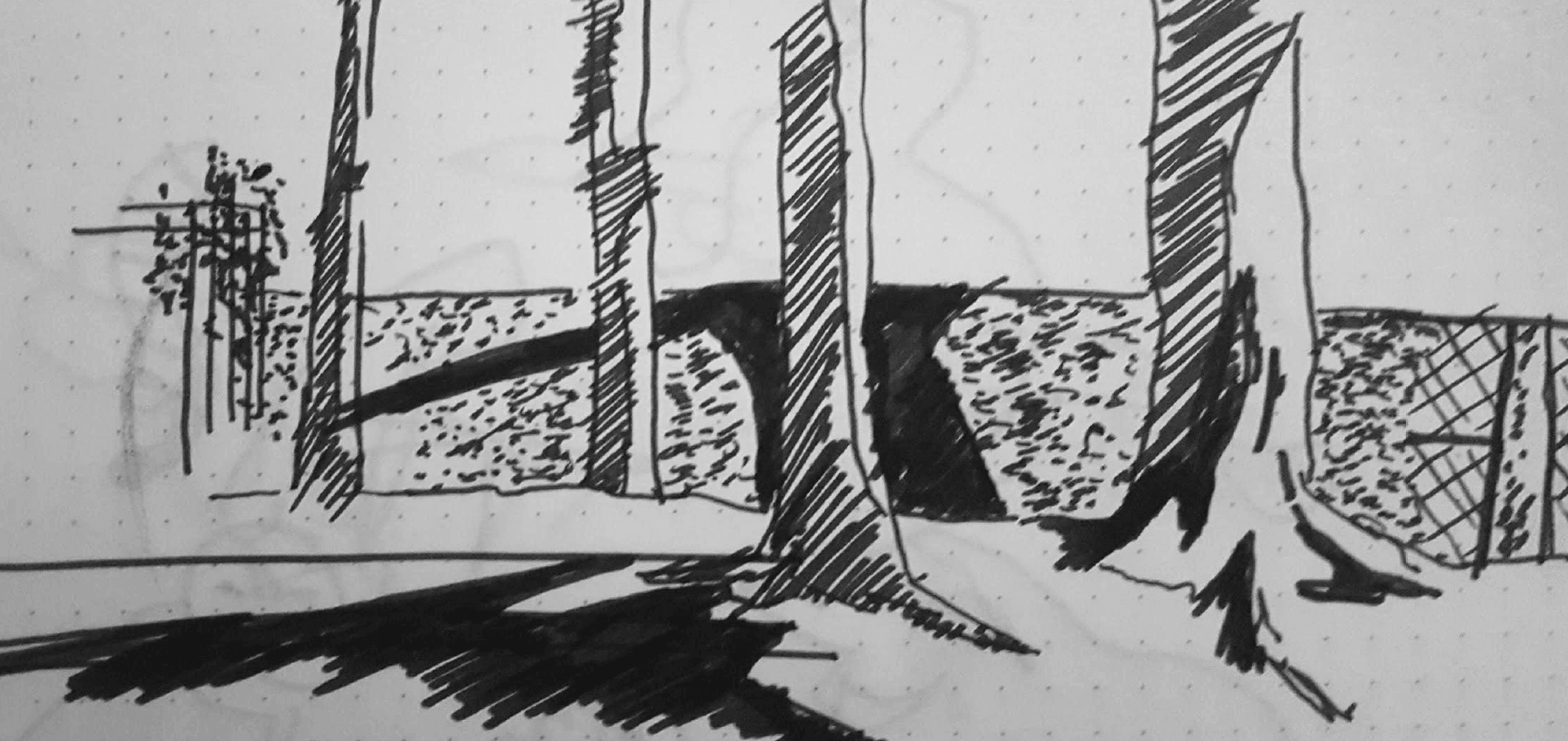
Understanding and accepting our differences jolted me awake and restored me to a better Theresa. Together we would share stories. She’d relieve her struggles and I’d free my curiosities. I handed her open ears, love and kindness, and appreciation, but instead was oftentimes rewarded with confusion and pain. We never could relate to each other. Our worlds are too different and our perspectives incomprehensible. We would entertain the idea of it not being a problem by sitting side by side, smoking, talking, looking at the trees, but never at each other. And we never would have. And we never will.
“But what if it’s not fighting back, but you just have to show them there’s a more beautiful world?
Yes, when you fight them back, and you tell them.
But some people can know you, but some is not. Why? Because from the root, they have the hardest root (sternly beats against the countertop) you cannot change them. They don’t have love … from the root, from the childhood. And then, is everything in your brain, you think you can erase?? It is very hard. Very hard whatever your memory is in there. So their memory life? It is bad. It always have the bad thing, bad thing, bad thing, bad thing. So now you try to tell them? Life is beautiful? No. Because whatever you say is the verbal, but whatever I see I gone through, is more real life to me.”
Kaede is by no means my antagonist or downfall. She is a lovely individual who has been affected by her uncontrollable environment. And I am a grateful dreamer who could not understand this person’s world. At the time, I’d awe at her endeavors and she’d cherish the person she became in my world. We shared good times, and we could have created more, but we cannot deny our differences. We cannot be blissfully ignorant.
Mẹ
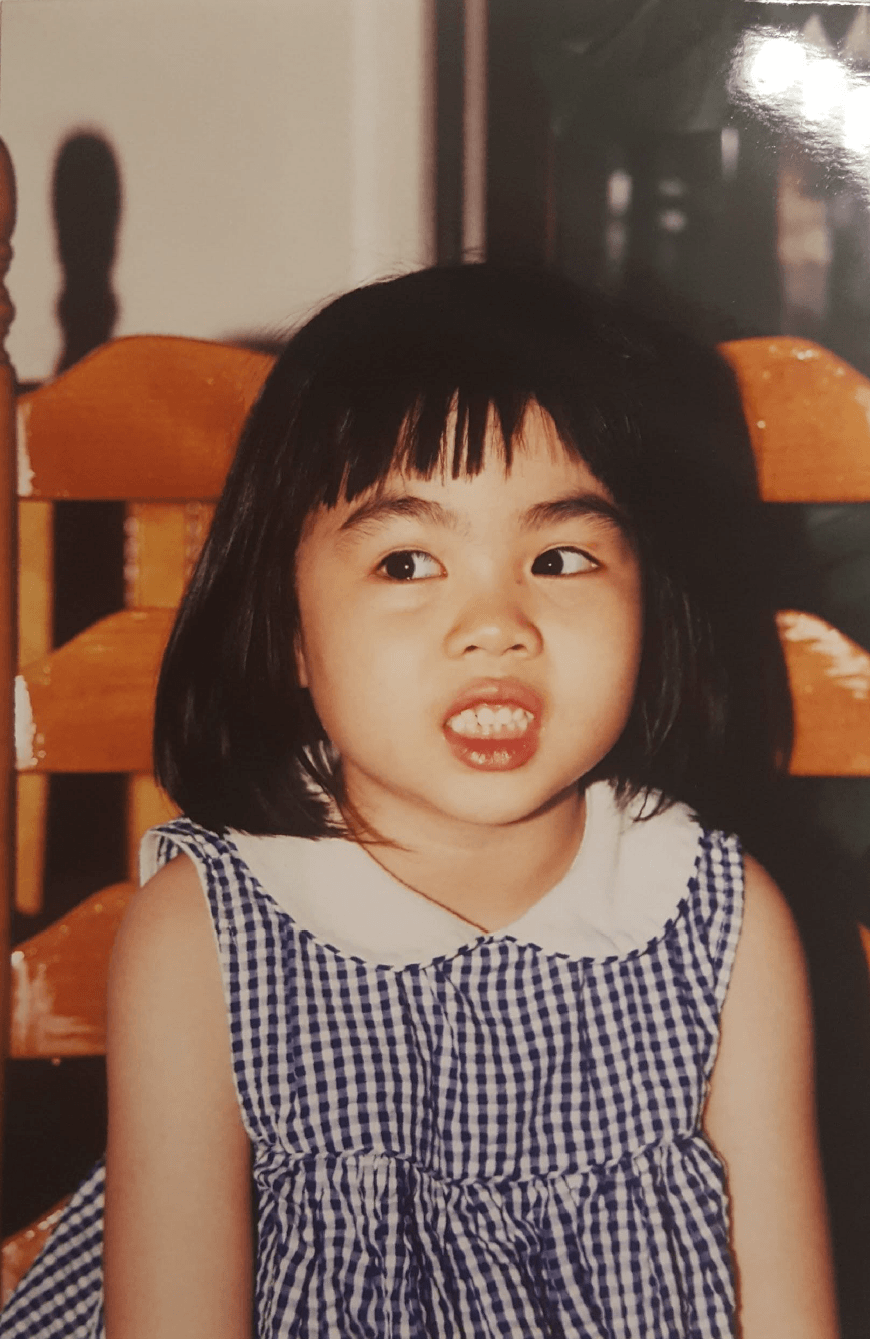
I’m listening.
I’m learning.
I’m growing, and my wings are too. The little moments of transformation take a haul, but I’ll be strong.
At first I thought (and hoped) this past year had occurred for a clear reason. I believed that if I could tell this story and apply others’ wisdom then it would all make sense and I’d finally be a well-informed adult of society.
However, I don’t think there is one distinct moment marking adulthood or coming-of-age. In fact, we’re constantly shifting and gaining and losing perspective, and I believe it is almost equally naive/ignorant to cling to one single truth. To not adapt.